
Reviewed · PROVIDENCIALES TOURS
Fast-Track Kiteboarding Camp: Best for Beginners
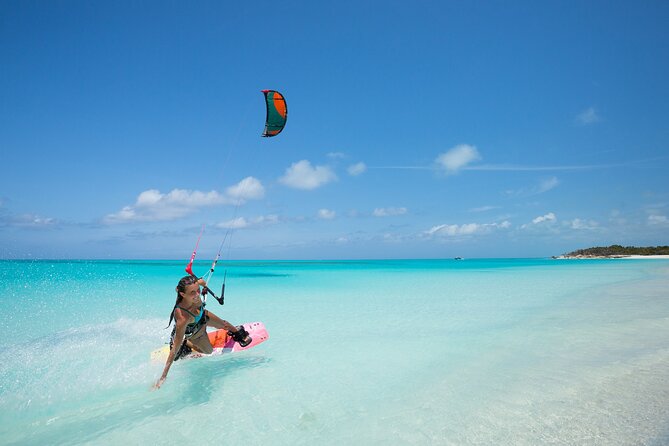
Ready to trade a beach chair for a board? This three-hour fast-track kiteboarding camp in Providenciales takes beginners from basic kite handling to their first water starts in one lesson. I like the small two- or three-person format, which gives you more coaching than a large class, and I like that all equipment and jet ski support are included. The main catch is timing: lessons must take place at low tide, so your exact start time is sent only after booking.
The $450 price is high for a three-hour activity, but it covers instruction, gear, taxes, and a maximum group of three. That makes the cost easier to justify if you want a serious first lesson rather than a quick beach activity. Still, kiteboarding takes practice, and one session may give you a taste of the sport more than full independence.
The instructors are a major part of the appeal. Alan is praised for being patient and encouraging, while Mike is noted for setting a good learning pace and explaining kite control clearly. The school has operated in Turks and Caicos since 2006, and the lesson is built for complete beginners, including participants age 10 and up who weigh at least 80 pounds.
In This Review
- Key Points Before You Book
- FAQ
- Where does the kiteboarding lesson begin?
- Where does the activity end?
- How long does the lesson last?
- How many people can join the lesson?
- What age is required to participate?
- Is there a minimum weight?
- Why is the exact start time sent after booking?
- Is equipment included?
- Is transportation included?
- What happens if bad weather cancels the lesson?
Key Points Before You Book
- Low tide controls the schedule: You need shallow water where you can stand and walk, so the exact lesson time changes from day to day.
- The group never exceeds three people: This semi-private setup gives you more personal instruction than a standard group class.
- Your first water starts are the goal: The lesson moves from beach practice to kite control, body surfing, and board starts.
- Jet ski support is included: This adds a useful safety resource while you are learning in the water.
- The $450 fee includes the working essentials: Equipment, instruction, and the 12 percent government tax are included, but food, drinks, and transportation are not.
Kiteboarding looks simple from the beach. A kite catches wind, a board skims across the water, and the rider appears to glide with little effort. Your first lesson quickly shows how much control is involved. You need to understand the kite, the wind, the safety systems, the board, and your own body position, often at the same time.
This camp handles that learning curve in sensible stages. You begin with teaching aids on the beach, where an instructor can explain the equipment without making you manage a kite and board in moving water. That early practice is valuable because it cuts down on wasted water time.
The lesson is designed to get you from no skills to your first starts on the board. That does not mean you will become an independent kiteboarder in three hours. It means the session has a clear goal, and every part of the lesson leads toward it.
I especially like the focus on communication. A kiteboarding lesson can become confusing when instructions come too quickly. The school uses instructors trained to explain the sport clearly, and the positive feedback about Alan and Mike suggests that patience and pacing are central to the experience.
The lesson begins and ends at Swaying Palms on Joe Wood Drive in Leeward Settlement, Providenciales. You arrange your own way there, since hotel pickup and drop-off are not included.
The location is near public transportation, which helps if you are not renting a car. Still, you should plan the transfer carefully because the lesson time is not fixed at the moment of booking. The operator messages you after booking with the exact start time.
That flexible timing is not a minor detail. Kiteboarding lessons need suitable water conditions, and this session is scheduled around low tide. At low tide, you can stand and walk in shallow water, which makes it far easier to learn kite control and recover from small mistakes.
The school operates Monday through Saturday from 8:00 a.m. to 6:00 p.m. across the stated operating periods. Since times change daily, do not build a tight morning or afternoon plan around the lesson until your assigned time is confirmed.
The first part of the lesson takes place on the beach with teaching aids. This is where you learn how the equipment works and how to set it up.
You should expect to cover the main parts of the kiteboarding system, the steps for preparing the gear, and the safety systems that let you reduce power or separate from the kite when needed. This may feel less exciting than getting on the board, but it is the right place to learn the basics.
I see this beach stage as one of the strongest parts of the camp. Beginners often lose valuable time in the water trying to remember which line does what or how to react when the kite moves unexpectedly. Practicing first on land gives you a chance to listen, ask questions, and repeat the steps without fighting waves or current.
The instructors also teach how to control the amount of power produced by the kite. That skill is at the heart of kiteboarding. Too little power and you go nowhere. Too much power and the kite can pull you off balance. Learning to make small adjustments is more useful than simply learning to hold the kite in the air.
Once you understand the setup, the lesson moves into the water. You learn to control the kite while standing or walking in shallow water, which is why the low-tide schedule matters so much.
This stage helps you connect the theory from the beach with the feel of the kite pulling against the wind. You learn how to steer, how to manage power, and how to respond when the kite needs to be relaunched.
Relaunching is an important practical skill. Kites can fall onto the water during practice, and knowing how to get one moving again keeps the session going. You also work with the safety systems, so you understand how to handle the equipment responsibly rather than relying on the instructor to fix every problem.
Jet ski support is included. The information does not promise a particular kind of rescue or escort for every moment, but its presence gives the lesson an added safety resource while you are learning in open water.
The body-surfing portion also has a purpose. It helps you become comfortable moving through the water and managing the kite without the board. You learn how the kite affects your body before adding another piece of equipment to the task.
The final progression brings in the board. This is the point where the separate skills begin to work together: kite position, power control, body position, and board handling.
Water starts are often the moment beginners have been waiting for. You may not ride far or stay up consistently during a first lesson, but getting the board moving under kite power gives you a clear sense of what the sport feels like.
The instruction is not simply about forcing you onto the board. The earlier beach and water work prepares you to manage the kite first. That order matters. If you cannot control the kite, the board becomes a distraction rather than a useful tool.
Mike received particular praise for teaching at a good pace, starting with kite control and then building toward the board. That approach should suit you if you prefer to understand one step before adding the next. Alan is described as thorough, patient, and encouraging, qualities that matter when your first water start takes several attempts.
The lesson can also work for a small family group. A 15-year-old, 12-year-old, and parent completed the activity together, and the minimum age is 10. The minimum weight is 80 pounds, so check those requirements before booking for children.
Three hours is a useful first exposure, but it is not a shortcut to mastery. The camp is fast-track in the sense that it aims to reach first starts during one session. You should still expect kiteboarding to require more practice if you want to ride with confidence.
The semi-private group size makes the time more productive. With only two or three people, the instructor can watch your handling, correct mistakes, and adjust the pace. You may not have the instructor entirely to yourself, but you should receive more direct help than in a large class.
The small group also affects comfort. Beginners can feel self-conscious when they struggle with equipment in front of a crowd. A maximum of three people keeps the session more focused and gives everyone a chance to learn from the same steps.
You should book ahead if your schedule is limited. The activity is commonly reserved about 17 days before the date, which suggests that popular times can fill. Since your exact time depends on low tide, advance planning is especially helpful if you have other tours, meals, or transportation arranged.
At $450 per person, this is not a casual add-on for a beach day. It is a serious activity purchase. The value comes from what the price includes: the complete lesson, all required equipment, applicable government taxes, a small group, and jet ski support.
A private lesson would normally cost more, so the two- or three-person format is a practical compromise. You share the instructor but retain a more personal learning environment. If you are keen to try kiteboarding and want a proper introduction, the price is easier to defend.
The calculation looks different if you are simply curious. One three-hour session may leave you excited but still in need of additional lessons. You should treat the fee as the cost of a guided first step, not the price of learning the entire sport.
Food and drinks are not included. Bring water and a high-energy snack such as a power bar, dried fruit, or nuts. The physical work can be tiring, especially when you are repeatedly handling gear and getting back into position.
Sun protection is essential. Bring sunscreen and water, and consider inexpensive sunglasses with a strap. The advice to avoid expensive sunglasses is practical because equipment can be lost or damaged during an active water lesson.
Water shoes or neoprene booties are optional and usually not needed. You can bring them if you are concerned about your feet, but they are not required equipment.
Wear something suitable for an active water session and expect to get wet. The provided information does not specify a required clothing type, so focus on comfort, sun protection, and secure eyewear rather than packing special gear.
You should also have a moderate level of physical fitness. Kiteboarding involves standing, walking in shallow water, body surfing, managing equipment, and attempting water starts. It is a challenge, not a passive boat excursion.
Good weather is required. If poor weather forces a cancellation, you are offered another date or a full refund. That is helpful in a wind-powered sport, since conditions are part of the experience rather than a minor inconvenience.
You can cancel for a full refund if you do so at least 24 hours before the local start time. Changes made less than 24 hours in advance are not accepted, and cancellations inside that window are not refunded.
Service animals are allowed. The activity has a minimum age of 10 and a minimum weight of 80 pounds. It is also limited to three participants, which helps preserve the semi-private format.
I would choose this experience if you want a focused introduction to kiteboarding and are willing to work for your beach time. It is a good match for active couples, small families, and friends who want to learn a new water sport together.
It also suits you if you value patient instruction. The strong praise for Alan and Mike centers on clear explanations, encouragement, and a steady pace. Those qualities can make a large difference during a first lesson.
I would think twice if you want a relaxed activity with no physical effort or if your Providenciales schedule is packed with fixed-time plans. The tide controls the start time, and a three-hour lesson can be demanding. You also need to arrange your own transportation and bring your own food and drinks.
The rating is 4.9 from 40 reviews, with 95 percent recommending the experience. The most praised points are the instruction, the fun of learning a new sport, and the chance to progress from beach kite handling to board starts in one session.
Book the Fast-Track Kiteboarding Camp if you want more than a quick demonstration. The small group, complete equipment package, clear progression, and jet ski support make it a strong choice for beginners who want to reach their first water starts.
The main limits are the $450 cost, the tide-based scheduling, and the fact that one lesson cannot replace continued practice. If you accept those points, this is one of the better ways to turn a day in Providenciales into a hands-on skill rather than another afternoon on the sand.
FAQ
Other Providenciales trips people book alongside this one:
- 4hour Group Half Day Snorkeling Excursion in Grace Bay
★ 5.0 · 2,614 reviews - 4-Hour Catamaran Sail and Snorkel Tour from Grace Bay
★ 5.0 · 1,465 reviews - Love Buggy Island Tour with Lunch
★ 5.0 · 1,242 reviews
Where does the kiteboarding lesson begin?
The lesson begins at Swaying Palms on Joe Wood Drive, Leeward Settlement, Providenciales, Turks and Caicos Islands.
Where does the activity end?
The activity ends back at the meeting point at Swaying Palms.
How long does the lesson last?
The lesson lasts approximately three hours.
Same islands, a completely different day:
- Morning Half Day Cruise from Providenciales with Snorkeling and Iguana Island
★ 4.5 · 1,222 reviews - 2 Hour Champagne Sunset Cruise from Grace Bay, Providenciales (Adult Only)
★ 5.0 · 1,010 reviews - Mangrove Clear Kayak Tour
★ 5.0 · 794 reviews - Mangrove & Iguana Clear Kayak Tour
★ 5.0 · 507 reviews
How many people can join the lesson?
The maximum is three participants. It is a semi-private lesson for two to three people.
What age is required to participate?
The minimum age is 10 years old.
Is there a minimum weight?
Yes. Participants must weigh at least 80 pounds.
Why is the exact start time sent after booking?
The lesson must take place at low tide, when participants can stand and walk in shallow water. Tide times change each day.
Is equipment included?
Yes. The equipment needed for the lesson is included.
Is transportation included?
No. Hotel pickup and drop-off are not included. The meeting point is near public transportation.
What happens if bad weather cancels the lesson?
You will be offered a different date or a full refund if poor weather causes the activity to be canceled.
Just listed around Providenciales
- Jet Ski Fest in Turks and Caicos Islands★ 5.0 · 4 reviews
- Relaxation and Therapy Massage in Paradise Turks and Caicos★ 5.0 · 11 reviews
- Shared Horseback Riding in Turks and Caicos★ 4.5 · 7 reviews
- Wow Extreme Tube on Gracebay Beach Turks and Caicos Islands★ 4.5 · 7 reviews
- Unguided Jetski Adventure★ 3.0 · 2 reviews
- Private Luxury Transfer to/from Airport Turks and Caicos★ 5.0 · 3 reviews
- Turks and Caicos: Private ONE-WAY Airport Transfer★ 4.0 · 10 reviews
- 2-Hour Luxury Axopar Private Charter! Explore the Turks in style!★ 5.0 · 5 reviews
Providenciales Tours, compared.
4hour Group Half Day Snorkeling Excursion in Grace Bay
Read our review →
4-Hour Catamaran Sail and Snorkel Tour from Grace Bay
Read our review →
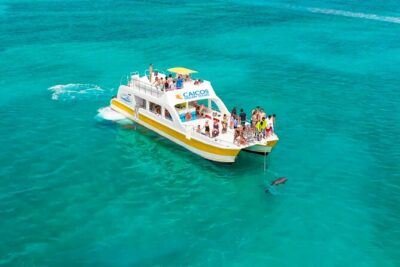
Morning Half Day Cruise from Providenciales with Snorkeling and Iguana Island
Read our review →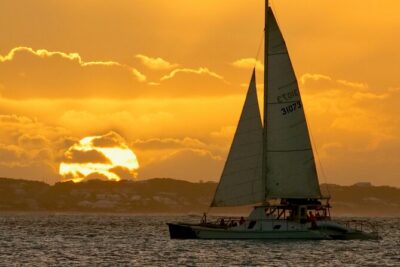
2 Hour Champagne Sunset Cruise from Grace Bay, Providenciales (Adult Only)
Read our review →
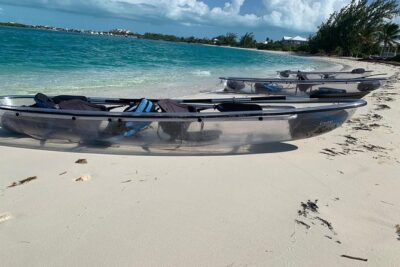
Afternoon Half Day Cruise from Providenciales with Snorkeling and Iguana Island
Read our review →Browse the lists this tour appears in